Korean Exchange Listing Playbook: Upbit & Bithumb Strategy for 2026
How Korean exchange listing reviews actually work, how Upbit and Bithumb differ, and what a parse of every 2026 Upbit trading-support notice says about the listing calendar.
Key Takeaways
- A Korean listing is a four-stage review run by exchanges under DAXA's self-regulatory listing standards, with compliance teams that Tiger Research pegs at around 40 AML professionals at Upbit alone
- Two venues hold the book: Upbit 71.6% of H1 2025 domestic volume, Bithumb 25.8%, together roughly 96% of all Korean trading (Source: FSS / Cryptonews, Kaiko)
- About 20% of Koreans trade a market whose listed-asset capitalization reached 107.7 trillion won in H2 2024 per the FSC/KoFIU semi-annual VASP survey
- The win is durable liquidity engineered before day one, trust built ahead of the listing decides whether the book holds or fades
A Korean exchange listing reads, from the outside, like an event: a notice drops, the pair goes live, a price prints. Treated that way, it almost always disappoints. The listing is the visible end of a process the exchange has been running quietly for weeks, and the projects that benefit understood the bar before they applied. Two venues matter, Upbit and Bithumb, they weight different things, and the sequencing of awareness and trust ahead of the listing decides how the book behaves once it opens.
The Korea Context: A Small Country, An Outsized Book
Korea is not a side market. The domestic crypto market reached roughly 108 trillion won (about $77.5 billion) in the second half of 2024, with daily average trading volume of 7.3 trillion won, per the Financial Intelligence Unit. Around one in five Koreans trades digital assets, with investors in their 30s the single largest cohort at 29%.
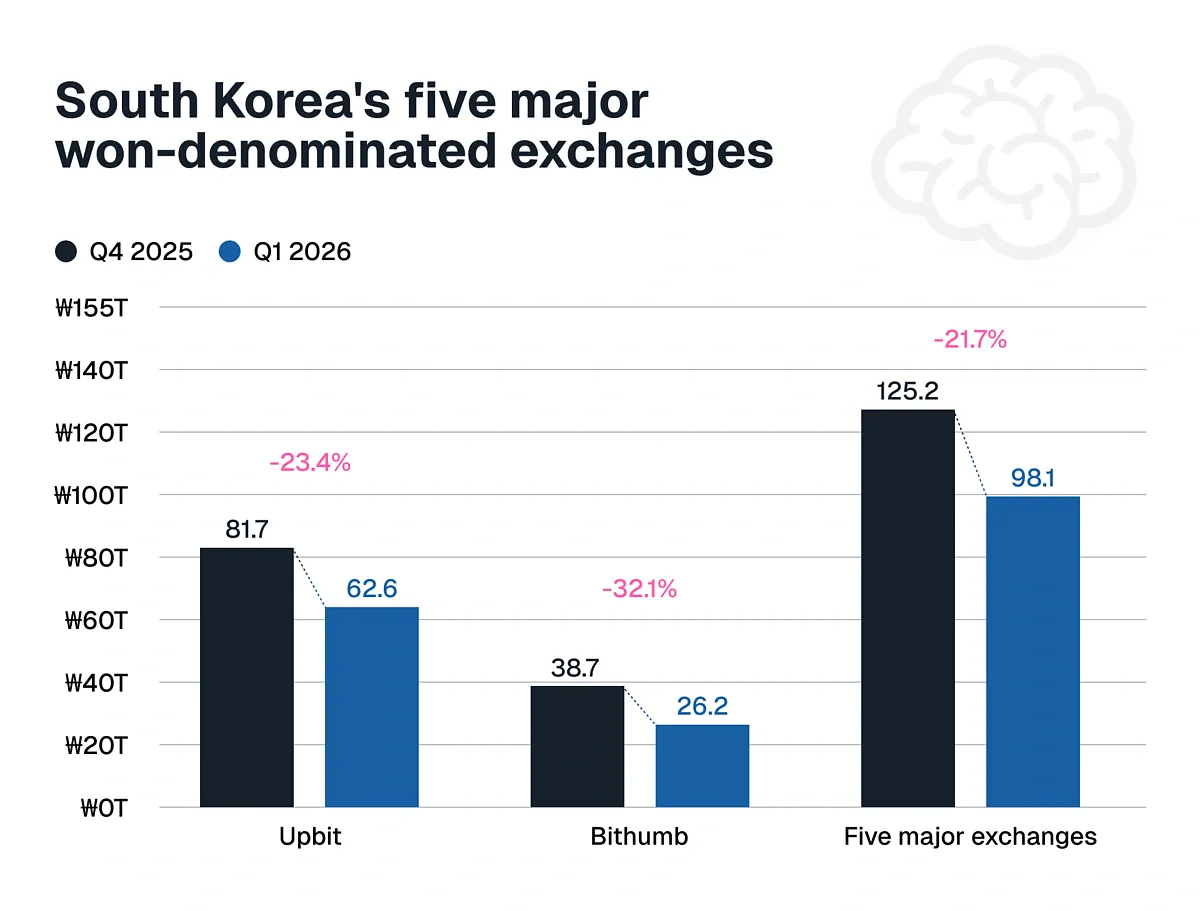
20%: Share of South Korea's population trading digital assets; listed-asset market cap 107.7 trillion won (~$77.5B) in H2 2024 (Source: FSC/KoFIU 실태조사)
What makes this demand strategically valuable is its concentration. Two venues hold almost the entire book. The figure matters more than its size: a market this concentrated means a foreign team is not choosing among a dozen distribution points, it is choosing between two, and each clears tokens on its own logic. Getting the read wrong on which venue fits the token wastes the one piece of leverage a project has before it applies.
| Exchange | Share of domestic volume, H1 2025 (%) |
|---|---|
| Upbit | 71.6 |
| Bithumb | 25.8 |
| Coinone | 1.8 |
| Korbit | 0.5 |
| Gopax | 0.2 |
The Readiness Bar: What The Review Actually Tests
The listing decision is a structured review, not a relationship favor. Tiger Research documents a four-part process across the major won-trading exchanges: sourcing candidates, a preliminary screen, in-depth deliberation, and listing with ongoing monitoring. The screen is staffed like a compliance function, Upbit runs roughly 40 AML professionals, Bithumb 36, Coinone and Korbit 13 each. Upbit and Coinone require a domestic legal opinion on whether the token is a security from the earliest stage, and the final review committee must include at least two external experts or 30% of seats, with at least one legal expert.
The staffing numbers are the tell. A team is not pitching a single decision-maker; it is submitting to a review function that scores securities risk, money-laundering exposure, and business viability in parallel, with legal sign-off baked in from the first stage. The headcount each venue dedicates to that screen is the clearest proxy for how seriously the bar is applied.
| Exchange | AML review staff |
|---|---|
| Upbit AML staff | 40 |
| Bithumb AML staff | 36 |
| Coinone AML staff | 13 |
| Korbit AML staff | 13 |
"Each exchange operates a dedicated research team to help list cryptocurrency projects that have proven their business viability."Tiger Research, Korean Cryptocurrency Exchange Listing Support Guidelines
Read that as a checklist, not a hurdle. Securities classification, money-laundering risk, and demonstrated viability are scored before a human ever debates your token. A team that arrives with the legal opinion drafted, the token economics documented, and a clean compliance posture is not gaming the process, it is meeting it where it already is. This is also where the compliance groundwork covered in our Korea regulation breakdown stops being abstract and becomes line items the review actually reads.
Upbit Versus Bithumb: Two Decisions, Not One
The most common foreign error is to treat "Korea listing" as a single target. It is two. The venues differ in book depth, in how aggressively they have fought for share, and in the procedural bar each applies. A token that fits one may sit awkwardly with the other, and the only numbers a team has to reason from are the ones the venues already reveal.
| Dimension | Upbit | Bithumb |
|---|---|---|
| H1 2025 domestic volume share | 71.6% | 25.8% |
| Q4 2025 share (Bithumb push) | majority | 31.1% (Q4 2025) |
| AML review staff | ~40 | ~36 |
| Domestic securities legal opinion | required from earliest stage | applies its own review |
| Role in price discovery | increasingly the reference book | challenger gaining depth |
The table reads one way: Upbit is the deeper book and the increasingly authoritative reference, while Bithumb has closed ground fast enough that it is no longer a fallback. For a project, that changes the question from "can we get listed in Korea" to "which book do we want to anchor liquidity in, and can we clear that venue's specific bar."
Sequencing: Trust And Awareness Built Before The Print
Here is the part most foreign teams invert. They treat the listing as the start of their Korea marketing. In practice it is a liquidity event that pays out against trust that already exists. The venues weight different things, Upbit's book is the deepest and its price increasingly sets the reference, while Bithumb has fought back hard, reaching a 31.1% share of Korean exchange volume in Q4 2025. A pair that lists into pre-built awareness opens to real bids. A cold listing opens to a thin book and a fast fade.
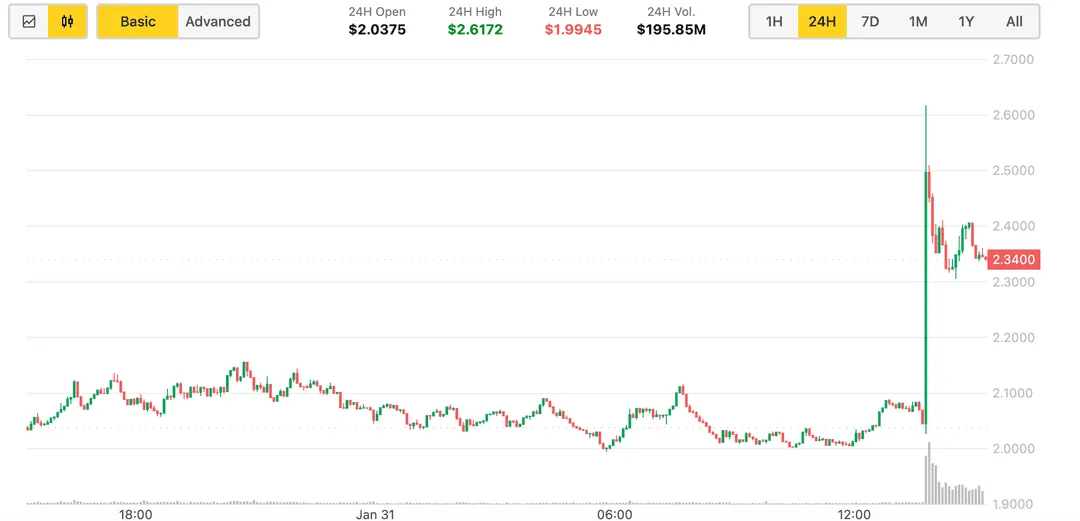
96%: Combined share of Korean trading volume held by Upbit and Bithumb, the two books worth engineering liquidity into (Source: Kaiko)
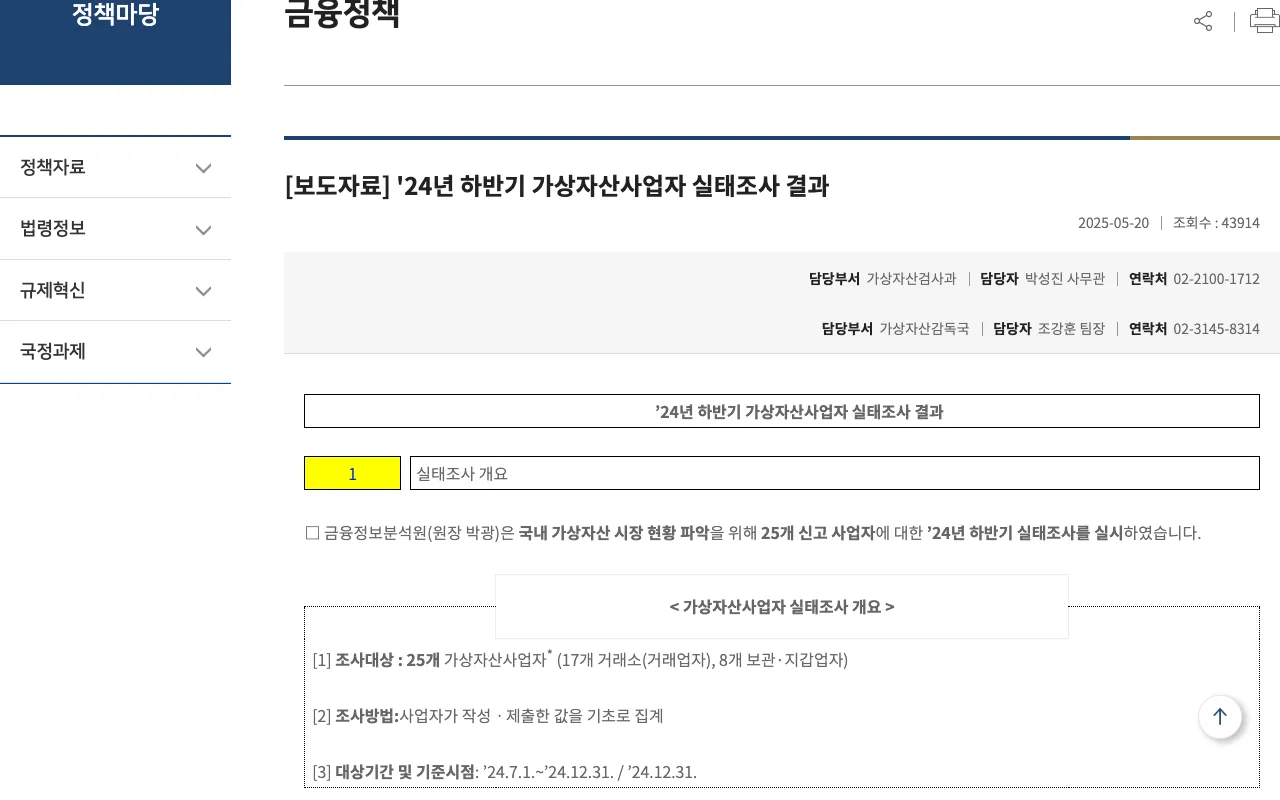
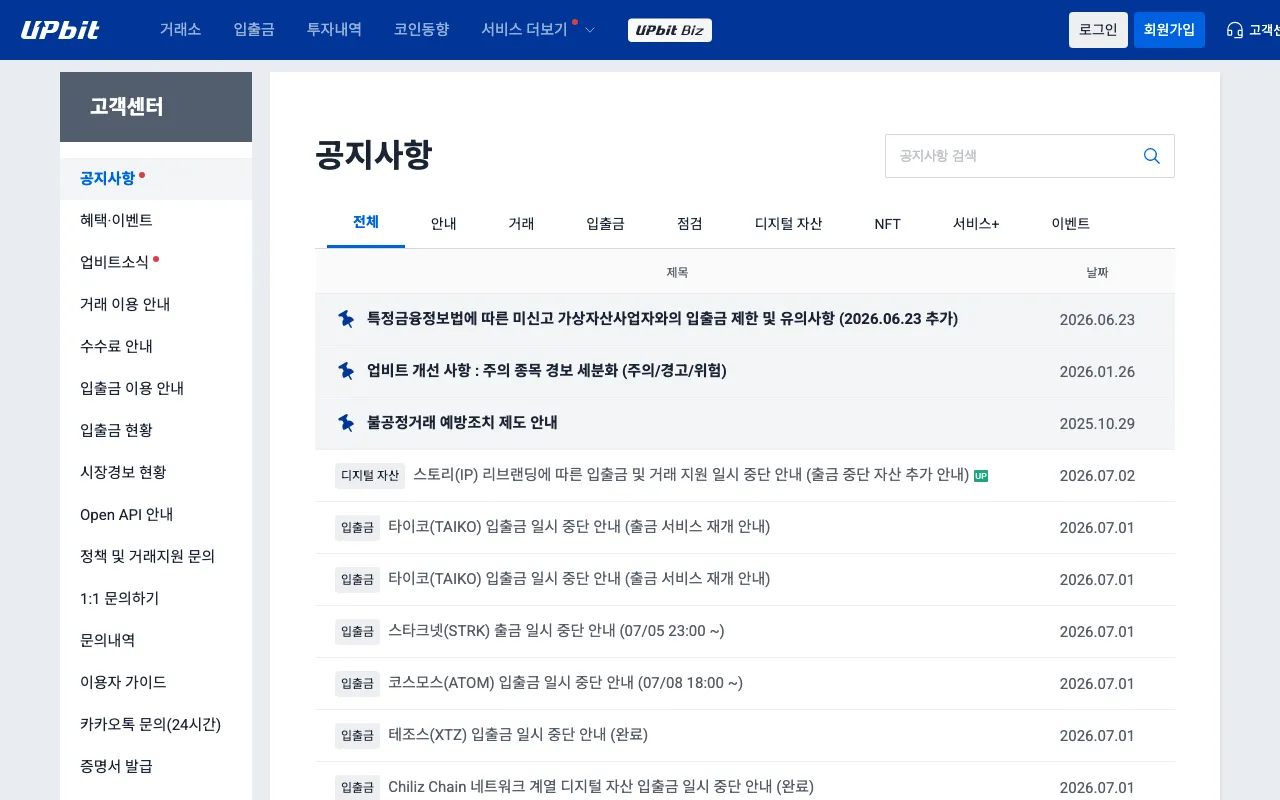
The ium Labs Upbit Listing Tracker, 2026 YTD
Talk about listing strategy is cheap; the notice board is not. So we built the dataset ourselves: every new trading-support notice Upbit published in 2026, parsed from the exchange's own announcements feed and re-cut monthly. 45 tickers received new trading support in H1 2026, 34 of them on the KRW market, and the monthly cadence tells you more about listing strategy than any rumor channel.
| Month (2026) | New Upbit trading-support tickers |
|---|---|
| Jan | 6 |
| Feb | 6 |
| Mar | 3 |
| Apr | 8 |
| May | 6 |
| Jun | 16 |
45: Tickers that received new Upbit trading support in H1 2026, 34 on the KRW market, per our parse of the exchange's official notice feed (Source: ium Labs Listing Tracker)
| Month | New listings | Tickers |
|---|---|---|
| January | 6 | XAUT, ZK, BREV, USDE, ELSA, SENT |
| February | 6 | BIRB, TAO, AZTEC, ESP, SKR, CFG |
| March | 3 | EDGE, ICP, KAT |
| April | 8 | ZAMA, CC, PIEVERSE, CHIP, PRL, XCN, BLEND, MEGA |
| May | 6 | WIF, PROS, VVV, UP2, IRYS, TRAC |
| June | 16 | SLX, CTR, OPG, SPX, RE, ARX, AI + 9-ticker BTC/USDT batch (PEAQ, LIT, KMNO, MORPHO, GRAM, LDO, PAXG, OSMO, AMP2) |
Three reads from the raw feed. First, March was the drought month, three listings, which lines up with the post-sanction compliance chill across the market. Second, June's 16-ticker surge, half of it in one batch notice, is Upbit clearing a backlog into the summer window rather than a change in standards, and batch adds skew BTC/USDT rather than KRW, so the KRW bar stays high. Third, the KRW-market share of new support (34 of 45) confirms the thesis of this piece: the won book is still where Upbit spends its listing risk budget. The full dataset is public at upbit-listings-2026.json, as published in July 2026.
The mechanism behind durable liquidity is concrete. Korean retail is famously exchange-resident, most users never move assets to self-custody, which means the depth you build on Upbit and Bithumb is the depth that exists. Coin Bureau's research walks through why Korean demand funnels into these venues and stays there. Because that demand never leaves the exchange, the awareness work done before the print is not marketing spend that evaporates, it converts directly into resting bids on a book that does not bleed out to self-custody.
What This Means for Operators
Plan backward from the order book, not forward from the announcement. Before the listing decision, the work is awareness and credibility, the discovery surfaces and community trust that become resting bids on day one. The application itself should arrive complete: securities opinion, token distribution schedule, audit reports, and a clean AML story, because that is what the screening teams score. Treat Upbit and Bithumb as two distinct decisions with different weightings, not one generic "Korea listing," and measure success on whether liquidity persists past the first week. The awareness layer that feeds those resting bids is the same machinery covered in our Naver discovery analysis: the surfaces a Korean investor checks before they place a bid.
What Breaks It
The counter-case is the cold listing. A team secures the slot, announces it as the milestone, and finds that an order book with no pre-built demand cannot hold a price. A second, structural risk: concentration cuts both ways. When the Korea Financial Intelligence Unit issued Bithumb a preliminary notice of a six-month partial suspension on new-customer external transfers in March 2026, analysts noted the likely effect was to push price discovery further onto Upbit, centralizing the book even more. A plan anchored to a single venue inherits that venue's regulatory risk. The fix is the same in both cases: build demand and trust ahead of time, and do not mistake the listing for the strategy.
This report reflects ium Labs' operating view and is intended for general information, not investment advice.
Sources
- Upbit corners 72% of S Korean crypto market as smaller exchanges 'face extinction', Cryptonews via Yahoo Finance
- S.Korea's crypto market doubles to $77.5 bn with 20% of population trading, KED Global, 2025-05-20
- Korean Cryptocurrency Exchange Listing Support Guidelines, Tiger Research, 2023-08-16
- The State of the Korean Crypto Market, Kaiko
- Upbit's dominance in South Korean crypto market declines in Q4 2025, KuCoin News
- Why Bitcoin's kimchi premium is on life support after South Korea targets crypto exchange, CryptoSlate
- How South Korea's crypto market skyrockets in 2025, Coin Bureau (YouTube)
- South Korea crypto market in 2026: maturity, regulation, growth, CoinGecko
- Top 5 crypto exchanges in South Korea: a comprehensive guide, YouTube
- VIRTUAL surges 28% as Upbit listing exposes token to South Koreans, CoinDesk, 2025-01-31
- ium Labs Upbit Listing Tracker, 2026 YTD (parsed from Upbit official announcements; 45 tickers, as of 2026-07-03), ium Labs, 2026-07-03